Teambuilding Exercises for Corporate Retreats and Company Offsites
By Craig Friedman
No matter what kind of company you work for — or own — there's always a sense that you could get more from your team and they could get more from their job. This is one reason corporate retreats have become more common, especially in the post-pandemic era.
Businesses seeking team cohesion and engagement, particularly with the rise of remote and hybrid work models, recognize the value of face-to-face interaction and team-building activities. The results: a boost in employee morale, engagement, productivity, and retention rates — crucial in a work environment that has become increasingly virtual.
Looking for evidence of ROI? Studies show that teambuilding activities lead to significant improvements in topics that just so happen to start with the letter c, including communication, collaboration, coordination, cooperation, commitment, creativity, celebration, capability, cognition, coaching, and conditions.
Why Do Teambuilding Retreats Work?
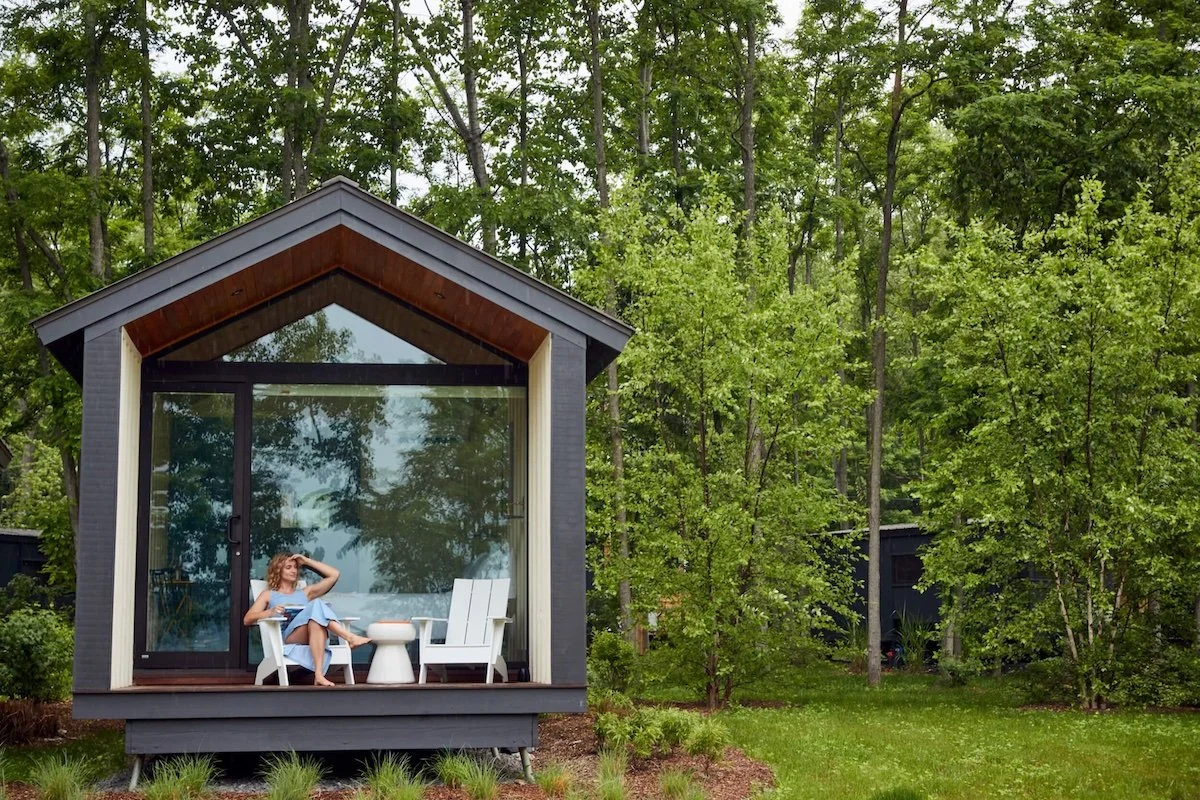
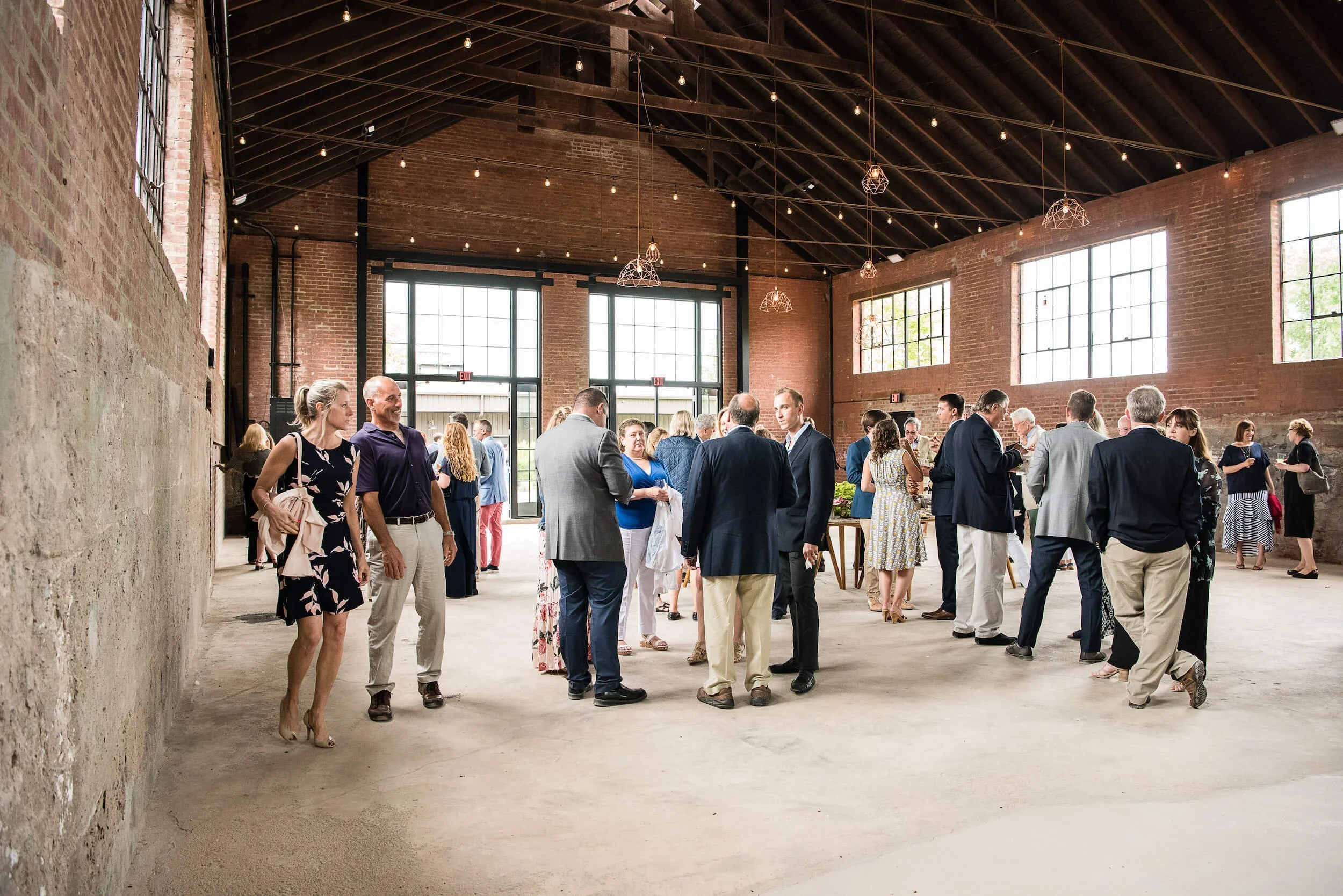
Corporate retreats offer an ideal setting for teambuilding activities because they remove workers (either a specific team or the whole company) from their everyday routines and encourage participants to engage in fresh and creative ways. Most people look for locations that aren’t too far away (driving under two hours) with lots of space — ideally in a calming, natural environment. Hutton Brickyards, for example, sits on 100 acres of land in Kingston, New York, not far from New York City, and offers an all-inclusive experience with luxurious cabins, onsite restaurants, many miles of hiking and biking trails, and large indoor and outdoor rooms that can accommodate thousands of people.
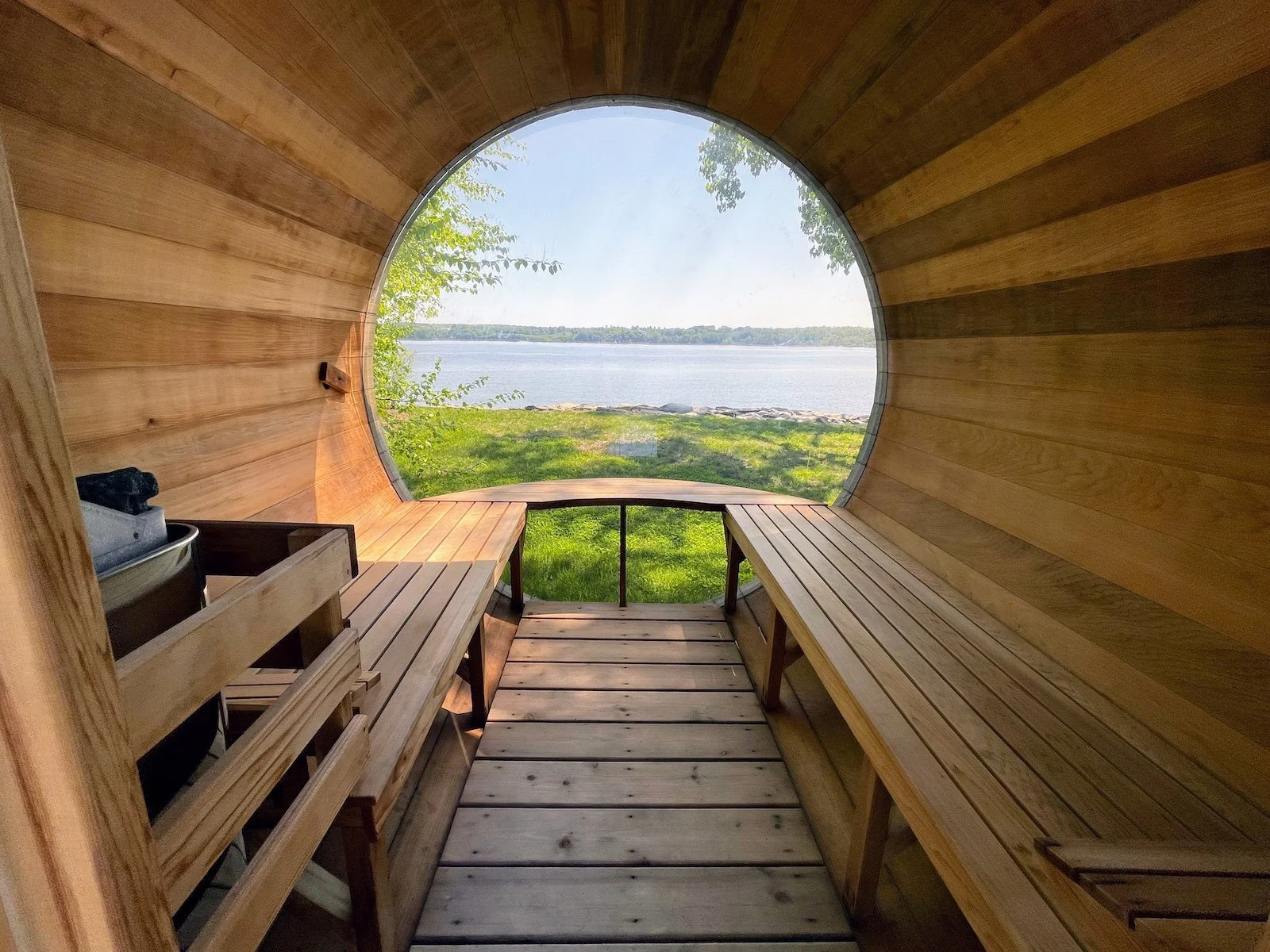
Event planners may also look for relaxing amenities like spas, massages, saunas, and pools in the hope that a new setting can foster rejuvenation. creativity, innovation, and harmony. Before you book your next team trip, familiarize yourself with some essential teambuilding concepts.

Teambuilding vs Team Bonding
Teambuilding is a structured approach to enhancing group collaboration, communication, and trust. Unlike team bonding, which focuses on fostering camaraderie and friendships through informal activities, teambuilding is goal-oriented and designed to develop specific skills or resolve challenges. While both are valuable for strengthening workplace dynamics, teambuilding exercises emphasize problem-solving, leadership, and adaptability—qualities essential for workplace success. “Offsites” can refer to team bonding or teambuilding.
5 Factors to Consider When Planning Teambuilding Activities
Goals: Identify the objectives before anything else. What are the goals?
Budget: How much are you investing in teambuilding? This can be expressed as a single amount or a cost per person and can include transportation, activity fees, food and drink, and accommodations.
Timeframe: How much time are you dedicating to teambuilding? A few hours, a 1/2 day, a full day, several days, or a week?
Attendees: Is this for everyone? Who participates and why?
Venue: Where will this take place, how far is it from the office, and what makes a place a great teambuilding destination?
If you need help with your offsite excursion, go to an event planner with experience booking teambuilding activities. Hutton Brickyards has collaborated with many excellent event planners and maintains a list of preferred vendors to ensure that each aspect of the retreat is handled by talented professionals familiar with the grounds. They are also open to working alongside new vendors. It’s a one-stop shop as the hotel serves as a venue and food and beverage provider.
Teambuilding Do’s and Don’ts
Don’t overschedule; give people time to eat, drink, take bathroom breaks, etc.
Do remember that some people have special needs whether it’s dietary restrictions (gluten-free, dairy-free, kosher, etc.) or elevators and ramps for the physically disabled.
Don’t assume everyone can meet there and join all the fun. Plan transportation with an awareness that not everyone owns a car or can go skydiving or zip-lining.
Do give people ample notice in advance if there will be significant time spent out of the office. They may need to change their pre- or post-work routine as a result.
Different Types of Teambuilding Activities
Almost every teambuilding activity is either an icebreaker or a creative challenge and either indoors or outdoors. Experts suggest that effective teambuilding combines three to four of these different activities. Start with icebreakers to build rapport, then segue into trust-building activities, and leave problem-solving or fun activities as the final activities.
Icebreaker Activities
Two Truths and a Lie: In this exercise, everyone shares two real statements about themselves and one totally made-up thing. Then the participants try to figure out which are the fibs. The process is straightforward: Player one shares three statements and the others go, one by one, stating which statement they think was made up. Once everyone has made their guess, player one reveals which statement was the lie. Then the action moves to player two. This light-hearted exercise builds personal connections, enhances listening skills, and fosters empathy among team members.
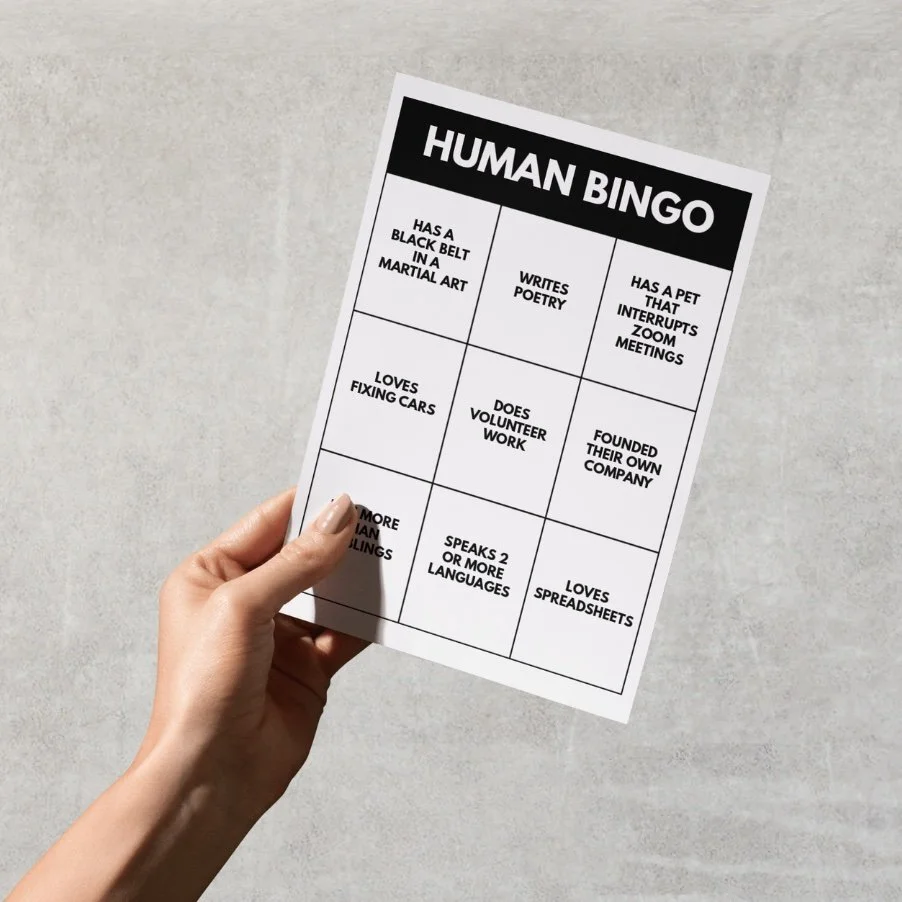
Human Bingo: Think bingo, but with phrases that correspond to traits like 'Someone who loves dogs' or 'Someone who's traveled to Europe.' The process: The organizer creates bingo cards with squares containing various traits, characteristics, or experiences. Examples include "has traveled to Istanbul," "loves to bake pies," "plays the guitar," or "has a pug." The cards are distributed to all participants, who must find other people in the group who match the descriptions on the squares. When someone finds a match, the person who matches writes their name in the corresponding square. Participants move around the room, interacting with each other and asking questions to determine if anyone matches the descriptions on their cards. The goal is to fill as many squares as possible. It is common to have rules specifiying that people can only sign one box per bingo card. This forces people to interact with many different people. The first person to complete a designated pattern (a row, column, diagonal, or the entire card) shouts "Bingo!"
Note: The game can be adapted to fit the group and the event. For example, the squares can contain work-related traits or personal hobbies. This gets everyone talking and you might find some unexpected common ground.
Team Trivia: The leaders of the teambuilding session come up with questions about the team, the company, or a major project. Participants attempt to identify the answers. It's a fun way to test team knowledge and see who knows what — and where there is confusion.
In case you’re wondering why you don’t see “Trust Fall” — an old-fashioned icebreaker activity — on the list, it’s because the physicality of the activity is viewed as potentially awkward. Consider one of the others above instead.

Indoor Teambuilding Activities
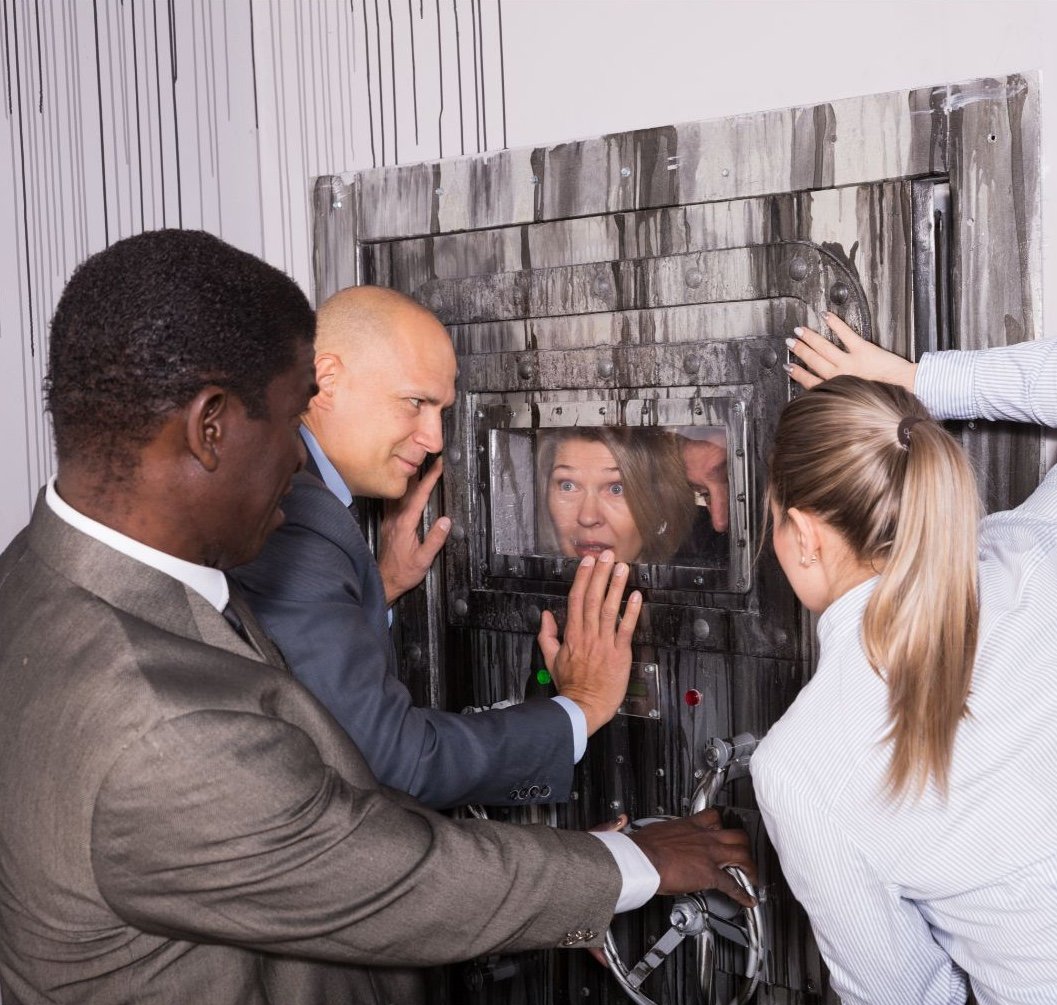
Escape Room Challenge: If you haven’t already participated in one of these, you’ve surely seen them in shows and movies: Teams work together to find clues and solve puzzles to "escape" a themed room (could be a zombie apocalypse, 1950s prison, deep space, murder mystery or submarine) within a set time (often an hour). Common challenges include logic puzzles, ciphers, riddles, jigsaw puzzles, and combination locks. Virtual escape rooms are also popular for those teams that can’t meet in person.
This exercise enhances problem-solving skills, encourages teamwork under pressure, and helps identify leaders within the group. As you divide your employees into smaller groups for these activities, remember that you want balance in each group — different kinds of personalities, strengths, and weaknesses.
Tower Building with Constraints: Teams are tasked with building a tower using limited resources like blocks, cards, or even random office supplies. To add a twist, some organizers impose constraints such as limited communication or a time limit. This activity sharpens problem-solving and prioritization skills.
One entertaining adaptation of this is called “The Marshmallow Challenge.” Teams are given a set of materials — like spaghetti sticks, tape, and a marshmallow — and have to build the tallest freestanding structure. This activity fosters innovation, teamwork, and adaptability as participants experiment and iterate on their designs.
Silent Line-Up: Ask the team to line up in a specific order — such as by birthdate, shoe size, height, or length of time working at the company — without speaking. Participants must use non-verbal communication to accomplish the task. This activity enhances creativity and reinforces the importance of alternative communication strategies (like visual cues, pointing, and gestures) to achieve the goal.
The process: Once the group believes they are in the correct order, they may verify their arrangement. For example, if the task was to line up by birthday, they might go down the line and say their birthdates. After the activity, it's helpful to discuss the experience. This allows participants to share their observations, discuss the challenges of non-verbal communication, and reflect on how they worked together as a team. This activity requires collaboration and coordination, encourages participants to pay close attention to one another, and helps people practice patience and adaptability.
Cooking Classes: The idea is simple, but the result is complex as everyone participates in creating an element of the meal. Usually, small groups take shape to make an appetizer, an entree, and a dessert. It's a great way to learn something new, and let's be honest, everyone loves food. It's also a surprisingly good way to get people talking and working together. In corporate-speak: Cooking together enhances communication and collaboration, maybe even resource management! Hutton Brickyards has experience hosting cooking classes of all sizes and types, including pizza and pasta workshops.
Business Case Study: Groups tackle a fictional business problem and present their solution, simulating real-world challenges. While this might not traditionally be seen as a "fun" team-building activity like a scavenger hunt or escape room, it can be a highly effective way to build team skills and cohesion, particularly in a professional setting.
The process: A realistic business scenario is presented to the team. This could be a past problem the company faced, a current challenge, or a hypothetical situation. The case study usually includes relevant data, context, and potential constraints. The team is divided into smaller groups and tasked with analyzing the case study. They work together to identify the core problems, brainstorm potential solutions, evaluate the pros and cons of each solution, and develop a recommended course of action. This process demands active participation and communication (debate and discussion) from all team members. As a teambuilding task, it challenges teams to think critically and creatively to find solutions; leverages each member's strengths; builds patience, trust, and camaraderie; and ideally helps teams apply their strategic thinking to real-world business scenarios with long-term impacts of decisions.

Outdoor Teambuilding Activities
Scavenger Hunts: Not just for children, scavenger hunts encourage collaboration, promote communication, boost problem-solving skills, enhance teamwork, foster a sense of shared accomplishment, force people to interact with people they may not normally interact with, break down barriers, and create a positive team dynamic. They can be tailored to various settings, budgets, and team sizes — and can be conducted indoors, outdoors, or even virtually.
The process: The organizer creates a series of clues that lead teams from one location to the next. This can include riddles, puzzles, codes, or even physical challenges. Participants are divided into teams, teams are given the first clue and set off on the hunt. They may need to use maps, GPS, or other tools to find their way. Along the way, teams may encounter challenges or tasks that they must complete to receive the next clue. These challenges can be physical, mental, or creative. The first team to reach the final destination and complete all the tasks wins the hunt.
After the hunt, it’s helpful to have a debriefing session, where team members can discuss what they learned, how they worked together, and what they could have done differently. In essence, scavenger hunts provide a structured and engaging environment for teams to practice essential collaboration and problem-solving skills while having fun.
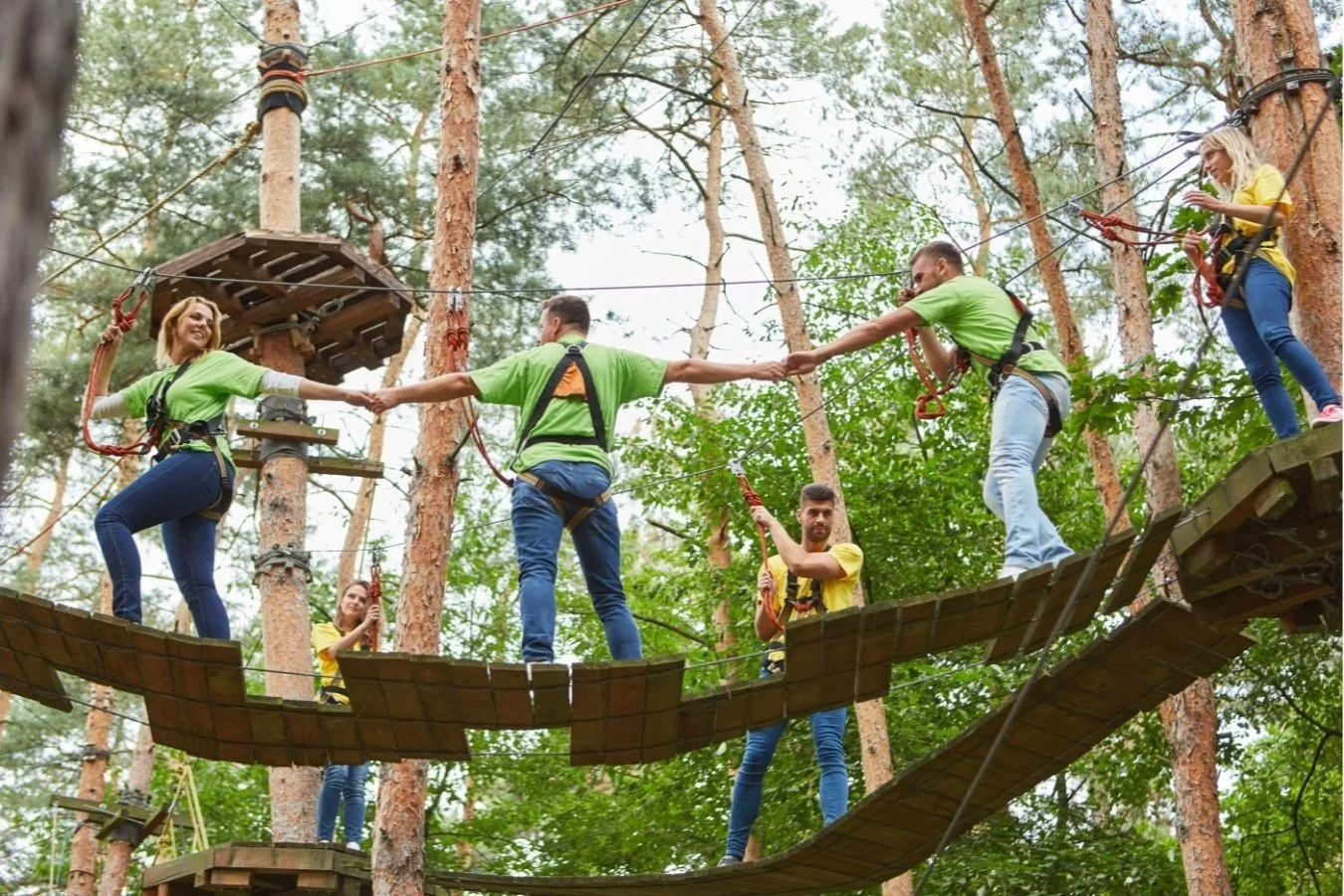
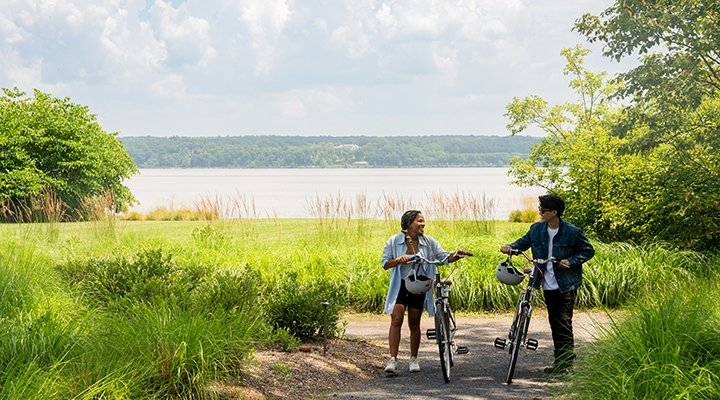
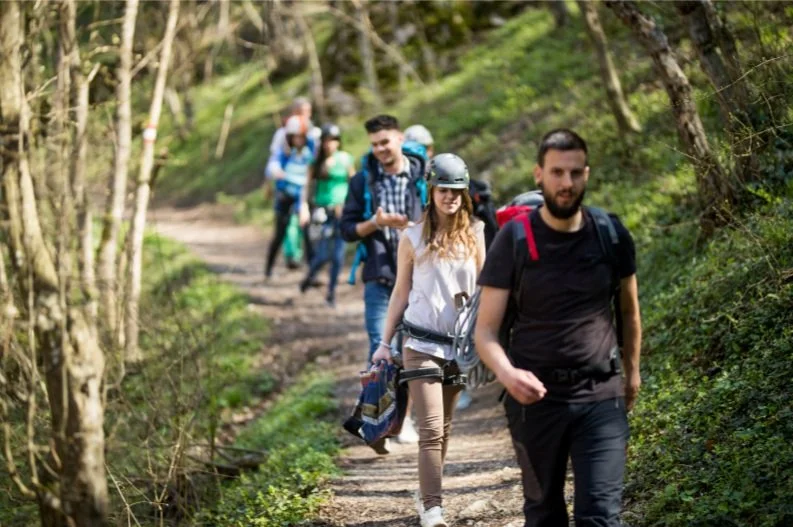
Outdoor Adventures: If you want to invoke exploration and adventure, you can organize hiking, biking, or kayaking trips — all easily accessed from Hutton Brickyards if it’s your main base. In addition to strengthening communication, camaraderie, and leadership development, this fosters problem-solving and navigating new terrain. One famous trail crosses directly into Hutton Brickyards; the Hudson River Brickyard Trail — a 1.9-mile segment of the 750-mile Empire State Trail — runs along North Street on the Hutton Brickyards property and through Sojourner Truth State Park.
The process: Event planners can create groups tailored to different fitness levels, making them accessible to a wide range of employees. Instead of being just a challenge to participate (and finish), the shared physical activity and the beauty of the natural setting can offer a refreshing and effective way to promote teamwork, communication, and well-being — all essential for a successful corporate environment.
Human Knot: This is a classic team-building exercise that's excellent for fostering communication, problem-solving, and collaboration. The goal is for the group to untangle themselves from a "human knot" without letting go of anyone's hands, ultimately forming a complete circle. The group stands in a close circle, shoulder to shoulder. Everyone raises their right hand and reaches across the circle to grab the hand of someone who is not standing directly next to them. Then, everyone raises their left hand and grabs the hand of a different person (again, not someone standing directly beside them). It's crucial that everyone is holding the hands of two different people. The group must now work together to untangle the "knot" without releasing anyone's hands. This often involves stepping over, under, and around each other, not to mention coordination and communication. The exercise is complete when the group has successfully untangled themselves and formed a complete, unbroken circle.
The key elements required: communication, problem-solving, collaboration, patience, and a sense of humor!

How to Streamline Creativity
Reconnect with your team two hours from New York City in the Hudson Valley, at Hutton Brickyards, where impeccable accommodations, a variety of meeting venues, onsite restaurants, and the natural sublime come together. Make memories, deepen collaboration, and set the agenda for your next big success.
Past clients include Deloitte, TED, Columbia University, and Hauser & Wirth, among many others.
Read more about hosting corporate retreats at Hutton Brickyards. Or call us at 845-514-4853.