
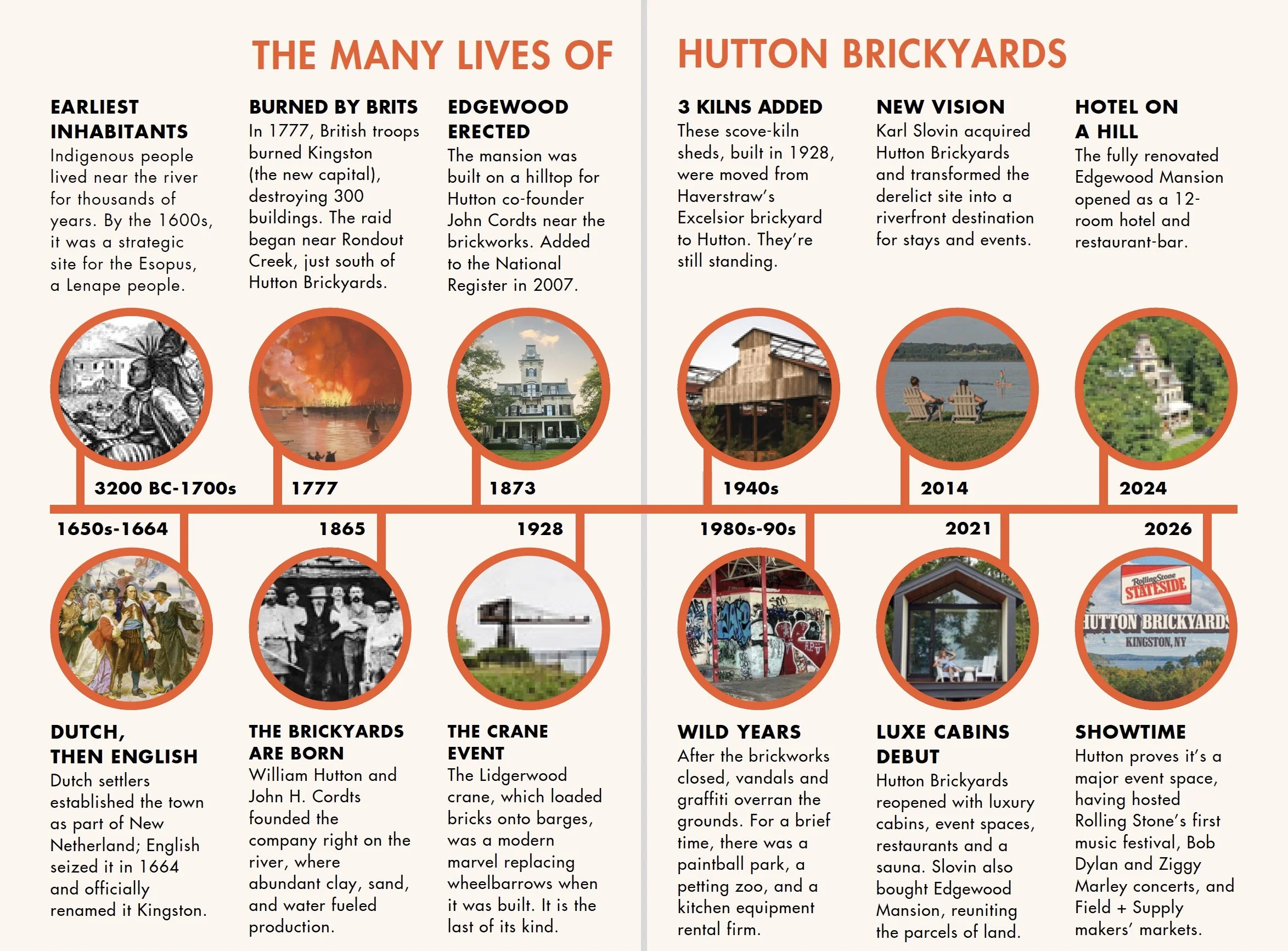
HUTTON BRICKYARDS TIMELINE
The best trails for hiking in the Hudson Valley have stunning views and abundant wildlife — and are well-maintained (and usually visibly marked). Text tk Text tkText tkText tkText tkText tkText tkText tkText tkText tkText tkText tkText tkText tkText tkText tkText tkText tkText tkText tkText tkText tkText tkText tkText tkText tkText tkText tkText tkText tkText tkText tkText tkText tkText tkText tkText tkText tkText tkText tk
This guide was written by Joey-Lynn Henderson, a local biologist and New York state-licensed hiking guide.
Photo: By Gyrobo - Own work, CC0
CHAPTERS
BEFORE THE BRICKS (3200 BC - 1845)
THE BUILDING BOOM (1865 - Early 1900s)
COMPETITION & SURVIVAL (1920s - 1950s)
THE END OF THE BRICK ERA (1965 - 1979)
THE STRANGE YEARS (1980 - 2007)
THE SECOND LIFE (2014 - Present)
MAP OF ALL TRAILS & PARKS IN THIS ARTICLE
EARLY LIFE ON THE RIVER
3200 BC
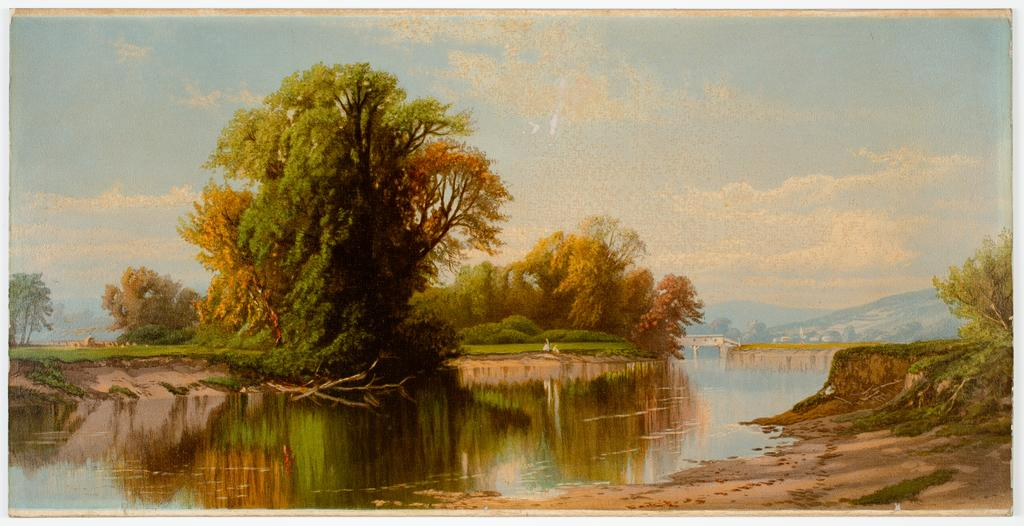
Archaeological evidence shows that Native Americans lived in what is now Kingston, New York, long before Europeans arrived. The Esopus people used the fertile flood plains of the Esopus Creek to farm and build vibrant trade networks.
Photo: Riley Johndonnell / Courtesy of ScenicHudson.org
Before the Bricks

1652–1658: Dutch settlers established a permanent settlement in the fertile Esopus Valley. In 1658, Peter Stuyvesant ordered it fortified and consolidated as Wiltwyck.
1664–1669: The English seized New Netherland in 1664; five years later, Wiltwyck was renamed Kingston.
1664: The Dutch surrendered the region to the British, and the region was dubbed “Kingston.”
1777: Kingston became the capital of New York State. The British, retaliating against American patriot rebels, landed near the mouth of Rondout Creek — a short distance south of the present-day Hutton Brickyards property — and proceeded with the “Burning of Kingston,” decimating 300 buildings. Reenactments take place annually to commemorate the torching.
1828: The Delaware & Hudson Canal opened, transforming nearby Rondout into a booming transportation hub. Coal, stone, cement and, eventually, millions of bricks moved through its waterfront.
1845: The Great New York City Fire, the last of three devastating fires (after 1776 and 1835), destroyed 345 buildings in Manhattan, reinforcing the city's shift toward fire-resistant brick and stone construction—a boon to Hudson River brickmakers.
Photo: Joey-Lynn Henderson
THE BRICK BOOM

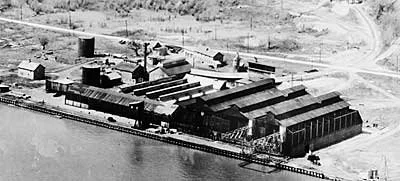
1865: William Hutton and John H. Cordts established the Cordts and Hutton Yard (later the Hutton Company Brick Works) at a site called "Steep Rocks" in the Rondout area of Kingston. The location was nearly perfect for brickmaking: abundant clay, water for processing and the Hudson River—a ready-made highway to New York City. Cordts retired from the partnership in 1887 and three years later the company assumed the Hutton name solely.
1870: Hutton was already one of the Hudson River's largest brickmakers, and produced 10.5 million bricks a year with their six steam-powered machines (which replaced human hands and horses, and which would eventually be replaced by electricity).
1873: Edgewood mansion was built on a hilltop for co-founder John Cordts near the brickworks. He retired in 1887 and died in 1891.
1880: The majority of the workforce at Hutton came from European immigrants (from Italy, Ireland, Hungary, Germany, and Poland) as well as Black Americans. They worked together and for long stretches. The average workday at Hutton was 10 hours (lower than the industry standard of 12 hours). Census data tells us that Hutton Brickyards also paid top dollar in 1880: $1.40 to $2.00 per day depending on skill level. In 1903, workers at Hutton Brickyards went on strike and demanded a 15-cent-per-day wage increase.
1870-1900: The Hudson Valley was already an established retreat for wealthy New York families long before the Gilded Age, but a new wave of super-wealthy industrialists and financiers — including the Rockefellers, Roosevelts, Astors and Vanderbilts — built or acquired enormous country estates on the banks of the Hudson. Across the Hudson, Hutton faces toward Ferncliff, the Astor family's grand Rhinebeck estate.
1890: The Hutton name took over, as Cordts & Hutton became the Hutton Company. William Hutton remained at the helm until his death in 1897, when six family members assumed control.
Early 1900s: By the turn of the century, there were already over 100 brickyards scattered throughout the Hudson Valley – earning it the title “Brick Capital of the World.” Hutton, along with others, supplied bricks to New York City landmarks such as the Empire State Building, the Brooklyn Bridge, and Yankee Stadium.
Photo: Photo by @dalyssahernandez via Ulster County Tourism
Best for Botanists & Climate Nerds

ESOPUS MEADOWS PRESERVE
With 96 acres and two miles of trails in a forest leading to the shoreline of the Hudson River, this is a great out-of-the-way place for dining alfresco — with a pavilion for picnics and views of the Esopus lighthouse. It’s ideal for people who don’t want to deal with the possibility of crowded parking lots. For those interested in citizen science and the cycles of climate, there’s a phenology trail; download the free Nature’s Notebook app and you can help track the seasonal changes of eight marked plant species along your walk. This data aids scientists in climate change research and is a fun learning experience for children of all ages.
Distance from HBY: 5.7 miles
Difficulty: 1/5
Duration: Trail loops ranging from 0.5-1.3 miles
Cost: Free
Hours: sunrise-sunset
Dog Friendly: Yes
Best All-Around Park and Trails

SHAUPENEAK RIDGE PARK
There’s something for everyone when you’re dealing with 936.5 preserved acres and 10 miles of trails that can be mixed and matched any way you like. It’s the perfect park for a family-friendly hike as it offers Louisa Pond, a waterfall, wetland areas, and scenic overlooks of the Hudson River. As a popular place for walking, trail running, and mountain biking — thankfully — there are two parking areas to help accommodate the traffic. The Old Post Road lot will lead you past the waterfall on your trek to the rest of the trails. However, if you park at Popletown Road, I recommend adding the waterfall to your list of destinations even if it’s a bit out of the way. It’s always worth it!
Distance from HBY: 8.5 miles, 8.9 miles (two parking areas)
Difficulty: 2/5
Duration: 9 trails ranging from 0.3 miles-1.63 miles
(can be combined to create nearly 10 miles of hiking)
Cost: Free
Hours: sunrise-sunset
Dog Friendly: Yes
Photo: Robert Rodriguez Jr. via Scenic Hudson
Best for Artists Seeking Inspiration

POET’S WALK PARK
Named for the inspiration it provided to writers including “Rip Van Winkle” author Washington Irving, this 2.2-mile loop winds through a meadow leading to various lookouts with views of the Hudson River. It’s a popular walk, but fortunately, the parking area is one of the largest. Interestingly, it’s the only park listed on the east side of the Hudson, which adds to its beauty because the Catskill Mountains provide a most stunning backdrop to the river. Be sure to explore the historic town of Rhinebeck while you’re here. You’ll cross the Kingston-Rhinecliff bridge so plan your drive back home during sunset for a sight guaranteed to leave you in awe.
Distance from HBY: 8.9 miles
Difficulty: 1/5
Duration: 2.2 miles
Cost: Free
Hours: 8:30AM- 6:00PM-8:30 PM (closing time varies by season)
Dog Friendly: Yes
Photo: @jrvandusen via AllTrails
Best Add-on While Visiting Nearby Towns

WALLKILL VALLEY RAIL TRAIL
This 22+ mile rail trail and park follows the former Wallkill Valley Railroad rail corridor in Ulster County and winds through the towns of Gardiner, New Paltz, Rosendale, and Ulster to the Kingston city line. While here, you can walk, jog, ride a bike or horse, and cross-country ski. Conveniently, there are parking areas in Kingston, Rosendale, New Paltz, Gardiner, and Wallkill. Multiple entry points makes it great for a stroll after exploring any of these towns.
Distance from HBY: 4.1 miles (Kingston/Rockwell Lane Parking)
Difficulty: 1/5
Duration: you decide when to turn back as it spans 22 miles
Cost: Free
Hours: sunrise-sunset
Dog Friendly: Yes
Photo: @kingstonhappenings
Best Views

ASHOKAN RESERVOIR PROMENADE EAST
The unparalleled views of the Catskill Mountains make this paved path a personal favorite. I'd go as far as saying it's one of the best views in the Hudson Valley. It’s worth the drive, too, which is beautiful in itself once you get off main roads and onto winding scenic ones. The Bald Eagle nesting site along the trail is a unique bonus so keep your eyes open! It’s great for bikes, walkers, and skaters. The large parking area is an added bonus.The only con: No dogs allowed.
Distance from HBY: 15.7 miles
Difficulty: 0/5
Duration: 5.6 miles out and back
Cost: Free
Hours: sunrise-sunset
Dog Friendly: No
Photo: Joey-Lynn Henderson
Best for Bikes, Skates and Strollers

WALKWAY OVER THE HUDSON
Previously an abandoned railroad, this is now the world’s largest elevated pedestrian bridge! Spanning from Highland to Poughkeepsie, this trail offers unmatched 360-degree views from 212 feet above the Hudson River. Looking up-river yields uninterrupted sights of the Hudson and its shores while turning to look down-river you are met with views of the Mid-Hudson Bridge. The terrain is smooth, flat, and straight making it great for bikes, roller skates, and strollers. Many events are hosted here such as walkway talks, makers markets, and special evening viewings so be sure to check the calendar.
Distance from HBY: 17 miles
Difficulty: 0/5
Duration: 2.56 miles out and back
Cost: Free
Hours: sunrise-sunset
Dog Friendly: Yes
Photo: Fred Schaeffer via Walkway Over the Hudson
Best for a Picnic

MINNEWASKA STATE PARK PRESERVE
What you’ll see: 24,000 acres of land preserved in the Shawangunk Mountain ridge (AKA “the Gunks”) containing 50 miles of trails and 35 miles of old carriage roads originally created for scenic rides enjoyed on horse-pulled carriages. For a short walk to a great destination, you can’t go wrong hiking to Awosting Falls, but if you’re looking to explore a more challenging route with incredible views consider taking the Gertrude’s Nose and Millbrook Mountain Loop. With various scenic destinations including streams, lakes, waterfalls, and overlooks, this is the perfect place to pack lunch and spend the day. While planning your trip here, keep in mind it is an extremely popular state park with around half a million visitors each year. Consider visiting on a weekday and arriving in the early morning or evening to avoid traffic and overflowed parking lots.
Distance from HBY: 23.3 miles
Difficulty: (1-4)/5
Duration: 2 miles & up
Cost: $10 per vehicle for parking, bike in free of charge
Hours: sunrise-sunset
Dog Friendly: Yes
Photo: @newyorktrails
Best Insane Waterfall

KAATERSKILL FALLS
You want wow factor? This 260-ft tall waterfall cascades over two tiers. As one of the largest waterfalls in New York state, it’s no surprise that it’s a top tourist destination. The relatively recent addition of the top viewing platform provides a safe vantage point to soak in this incredible sight. Proceed with caution and stay on trail as you make your way down MANY bluestone steps to get to the falls. If you’re feeling like you don’t want the hike to end, continue on to Inspiration Point; you won’t regret it!
Distance from HBY: 21.4 miles to Laurel Rd trail parking
Difficulty: 1/5 to viewing platform, 4/5 to lower falls + Inspiration Point
Duration: out and back 0.8 miles to platform, 2.3 miles to lower falls, 4.7 miles to falls + Inspiration Point
Cost: Free
Hours: sunrise-sunset
Dog Friendly: Yes
**Parking is shared with Mountain Top Historical Society, if full DO NOT park on the roadside as cars are often ticketed. There is additional parking at Scutt Rd trailhead and South Lake. Consider avoiding the hassle of finding parking and hop aboard the new Kaaterskill Trolley, which stops at nine places (directions are provided at the link).
Photo: @carlooftheforest via Spectrum News

A FEW FINAL WORDS…
Now that you’ve picked a hike, you need to prepare for the adventure ahead. My favorite outdoor mentor always said, “There's no bad weather when hiking, only improper gear choice.” Check the forecast and dress accordingly. Proper footwear is essential, preferably waterproof sneakers or hiking boots. You’ll want to bring snacks or lunch to enjoy with the view and plenty of water. Pack bug and tick spray as, unfortunately, that is part of exploring in the Hudson Valley. Lastly, it will be helpful to download any directions and trail maps just in case phone/map/GPS service can be unpredictable in remote areas.
And be sure to follow Leave No Trace principles, stay safe, and Happy Hiking!
Plan Ahead
DINING

In the spring, summer and fall, The River Pavilion is our waterfront restaurant featuring panoramic views of the Hudson.
In the cooler months, our restaurant at Edgewood delivers a cozy atmosphere with gastropub fare anchored by locally sourced produce.
ON-SITE AMENITIES

-
Please call the front desk to reserve
-
Located on the north lawn
-
Please call the front desk to schedule in advance
-
Please call the front desk for availability
-
Please call the front desk to request mats and they will be dropped off at your cabin
-
Explore the Empire State Trail
-
Enjoy a combination of locally sourced essentials, indulgences, and whimsical items to enhance your stay.
LOCAL ATTRACTIONS

Hutton Brickyards is surrounded by local attractions that cater to a diverse range of interests. Nature lovers can indulge in the beauty of nearby hiking trails and lush parks, immersing themselves in the tranquility of the great outdoors. History enthusiasts will find delight in exploring the town's rich heritage at the local museum. With a mix of nature, history, and adventure, Hutton Brickyards ensures a memorable and varied experience for all visitors.
